3rd Nov 2026
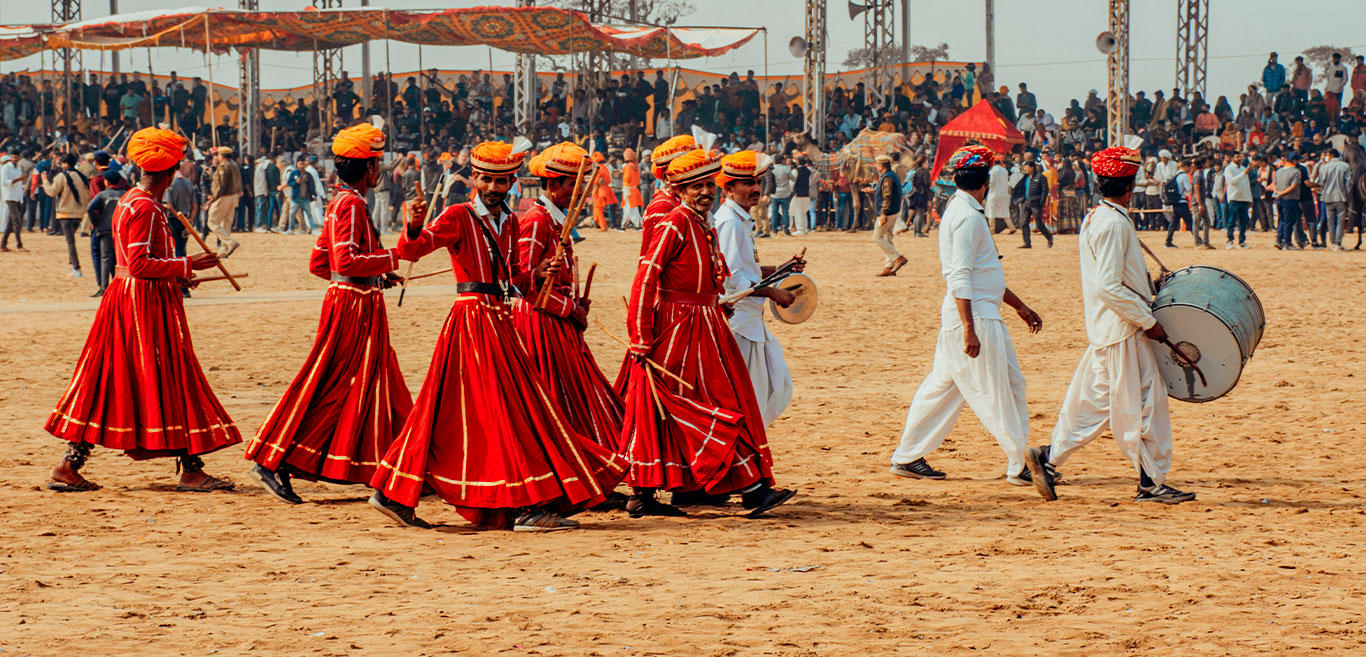
On the auspicious occasion of full moon night of Kartik Purnima, in the Hindu lunar month of Kartik, it’s the time to be in one of Rajasthan’s most vibrant cities. Pushkar’s spiritual roots, its cultural vivacity and incredible diversions will ignite your imagination and endlessly feed your curiosity about new places, people, and experiential journeys. Not just you, but your camera lens is going to be greedy to capture those kaleidoscopic moments which will remain etched in your memories for a lifetime.
What once started out as a camel/ livestock fair, the Pushkar Mela has transitioned into a magnificent cultural extravaganza—showcasing some of Rajasthan’s most significant facets for visitors from home and abroad. The Pushkar Fair 2026 will run from 17 to 24 November 2026 in this holy city, which is so significant for its connection with Lord Brahma the Creator, in the Hindu pantheon. Kartik Purnima, or the full moon night, will fall on 24 November, when tens of thousands of devotees will be seen, before sunrise, deeply immersed in the purification rituals in the hallowed waters of Lake Pushkar.
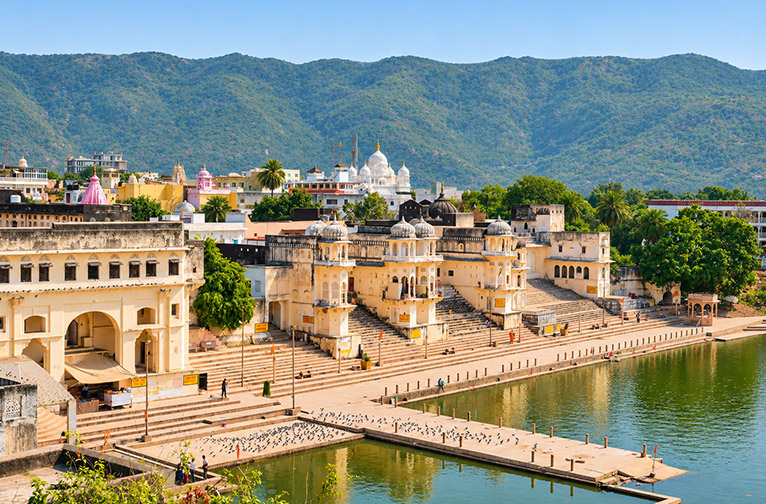
Pushkar, in fact almost year-round is a serene lakeside retreat, except when it explodes into celebrations during the annual festivals of Holi and Shivaratri— and of course Kartik Purnima. The legend of Lord Brahma is steeped in its soil and placid waters. It is believed to be the only place in India with a temple dedicated to him, unlike his other two companions of the sacred trinity of the of Hindu faith, Lord Shiva and Lord Vishnu, whose temples may be found scattered across the length of breadth of the country.
The fascination with Pushkar begins with its principal legend. Lord Brahma was looking for an auspicious place to conduct a yagna which, on his invitation, would be attended by Shiva, Vishnu and a host of other devis and devtas. In his hands he held a lotus (padma) flower, from which three petals came apart and floated to the ground. From the three spots where the lotus petals fell sprang up three lakes —Jyestha Pushkar, Madhya Pushkar and Kanistha Pushkar. While Brahma himself was revered as the patron deity of Jyeshtha Pushkar, Vishnu held sway over Madhya Pushkar, and Shiva over Kanistha.
The yagna was scheduled to take place at sunrise on Karthik Nakshatra. Vedic astrologers had it that this Nakshatra symbolised a necklace of extraordinary cosmic significance. Karthik Nakshatra releases a dynamic and fiery energy, which purifies, transforms, and illuminates the devotee. Brahma’s yagna culminated on Purnima, the full moon night of the Hindu lunar month of Karthik.
According to the Padma Purana “Just as there is no body of water like the ocean, there is no pilgrimage like Pushkar.” It is an endorsement of Brahma directions, after the yagna came to an end, that devotees should do the parikrama (circumambulation) of all three sacred lakes. Also known as Brahma Tirtha, Pushkar is considered king of all pilgrimages for Hindus.
A dip in the lake is not only spiritually rejuvenating; it is said that waters also have healing properties and can rid one of many ailments. Standing by the lakeshore is the beautiful Jagatpita Brahma Mandir, which holds pride of place amongst the string of shrines and the 52 sacred ghats lining the lake.
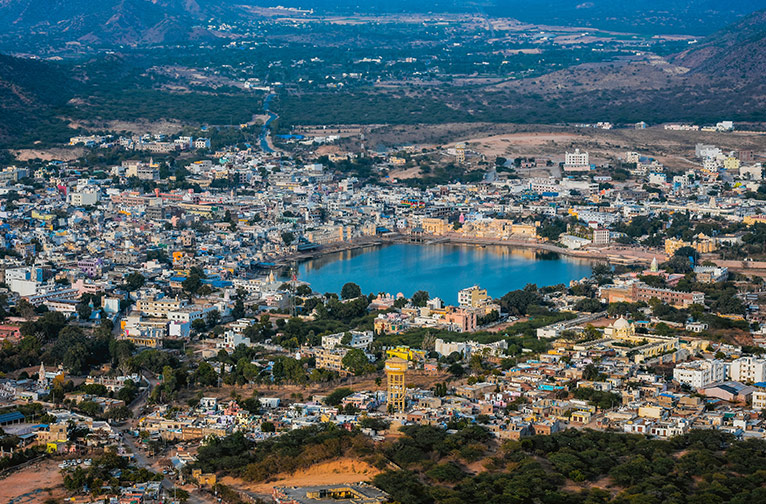
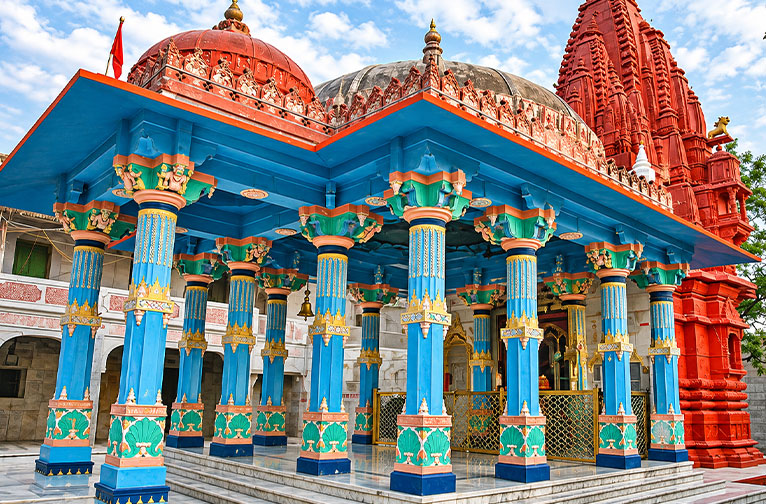
Having paid your respects at the Brahma Tempe, take a guided explorations of some of Pushkar’s popular sites which include the, Mukhya Brahma Ghat, Bade Ganesha Ji Ka Mandir, Gyan Gopal Ji Ka Mandir, Old Rangji Temple, Varaha Temple, New Rang Ji Temple, Bihari Ji Ka Temple Shahi Mosque, Malpua Gali, Ram, Laxman Temple and Jaipur Ghat which holds a grand evening aarti. Standing atop two hillsides are the lake-facing Savitri temple and the Gayatri temple dedicated to the two consorts of Lord Brahma.
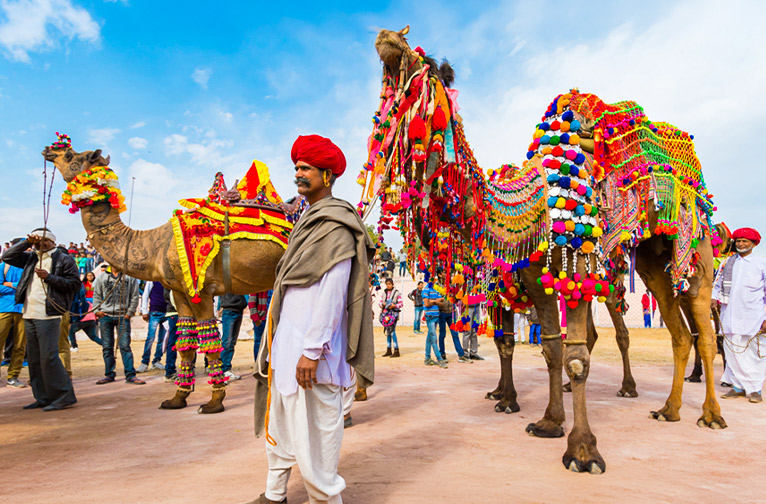
The cultural extravaganza unleashed by the Pushkar Mela, is a treat not just for first timers but even veteran visitors. The camel and livestock trading vignettes will bombard you with their authentic flavour in what is seen as the largest livestock markets in Asia. Let your camera lens go into overdrive taking shots of the animals being groomed and decked out in their ornamental trappings. Discover for the first time the variety of camels India is home to as they snootily look down on the mayhem around them. Unmissable is the Camel decoration competition and the camel dance.
Competitions are held in the mornings in the grounds, while in ten evening the action moves to the ghats for the Maha Aarti, held at Brahma and Varaha ghats followed by folk performances.
Let go of your inhibitions and participate in the friendly tug-a-wars, kabaddi and turban tying competitions; join the crowds shouting for their favourites in the camel races— and you just can miss the hilarious scenes at the longest-moustache competition.
All through the day Rajasthani folk musicians and dancers keep the crowds entertained. You can go camel riding in the desert or explore your nerves as a first timer in horse riding…even hot air balloon rides give you an aerial perspective of the mela.
Culinary adventures galore await in the Pushkar market and satisfying shopping sprees are a must. Shilpgram becomes a bustling hub with the advent of the Food & Craft Festival.
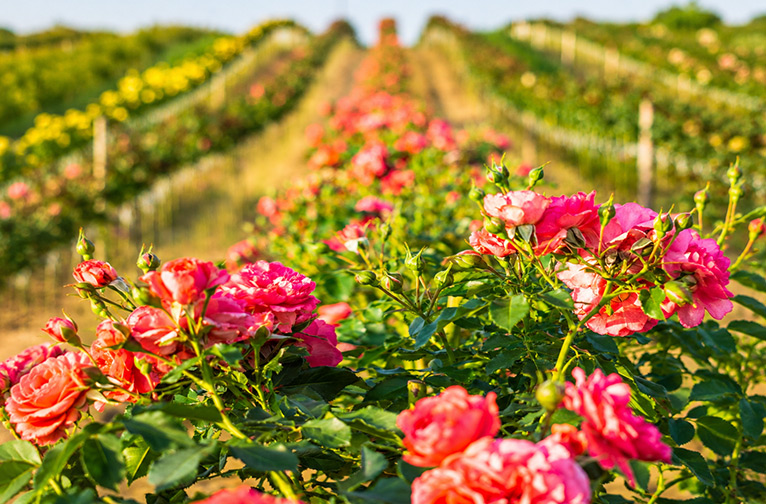
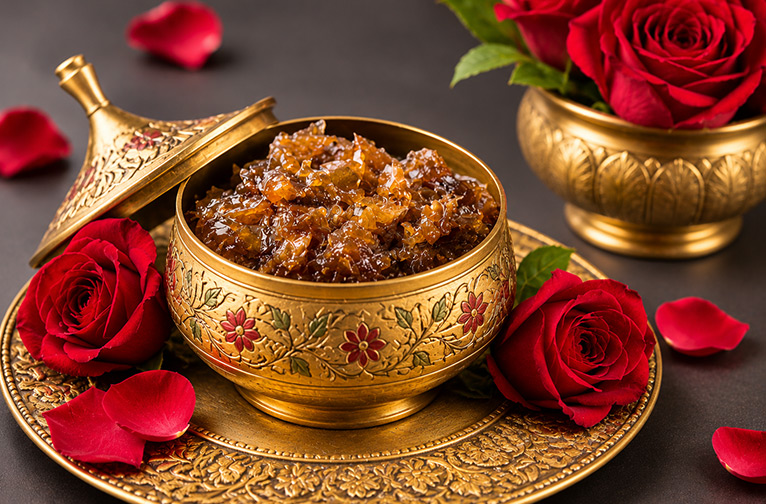
Arrange for a trip to one of Pushkar’s famous rose farms. Bet you didn’t know that Mughal Emperor Jehangir and his wife Noorjehan are said to have encouraged rose cultivation in these parts, after visiting the Dargah at nearby Ajmer. These fed a roaring trade of ittars, sherbets, wines and personal care products for the royals. Trawl Pushkar market for rose water, rose oil, and gulkund which is used in sweetening paans.
Pushkar Mela, or the livestock fair, expands its allure from the 10th–26th November. But the big event is held between the 17th and 24th November, when Kartik Poornima comes into full bloom. The religious fair runs from Dev Uthani Ekadashi on 20 November to Kartik Purnima on 24 November, the day of the main holy dip in Pushkar Lake. Pushkar Raj Maha Aarti is across the 52 ghats on the 24th. Entry to the fair is free.