14th Sep 2026
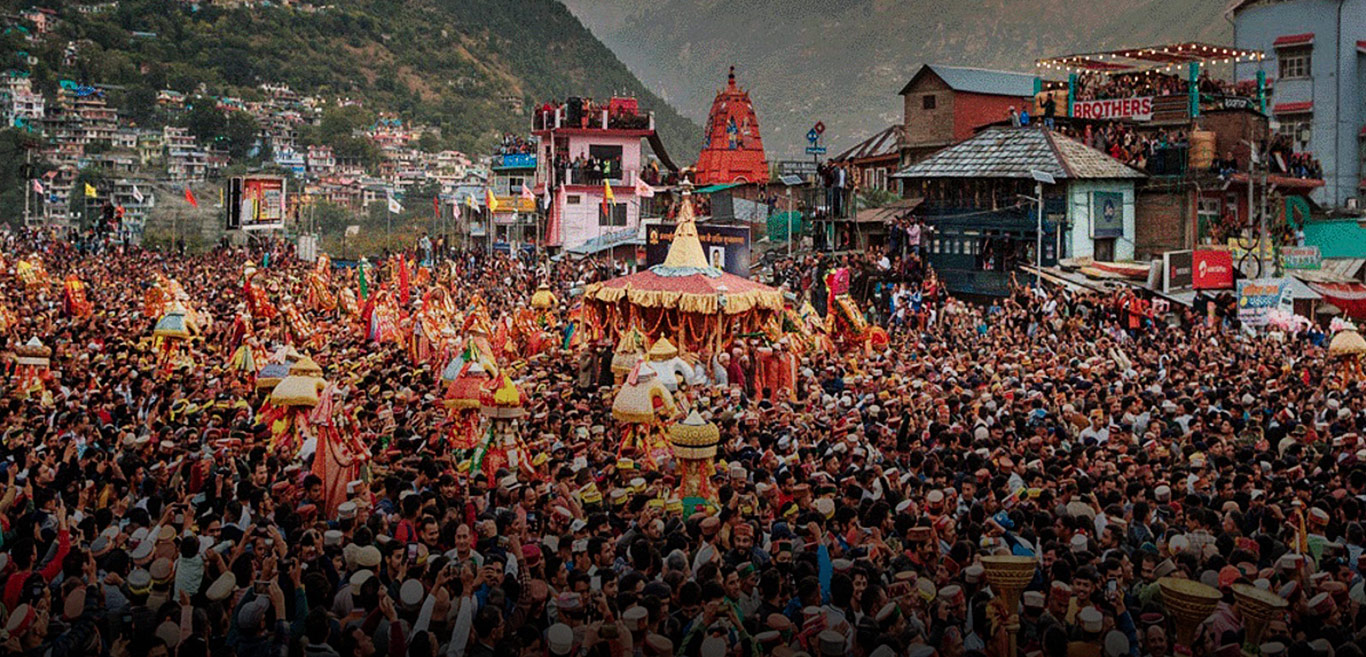
Embed a star on your calendar against October 24 to 30, 2026. This year you are headed to the scenic Himalayan environs of Kullu Valley, where you are going to plumb the depths of an ancient tradition which is deeply anchored in its spiritual and vibrant cultural landscape. Dussehra Festivities have long engulfed the hill town and its surrounds with their unique celebratory histrionics, thrilling both locals and visitors with seamless ease.
The Dussehra festivities in the Kullu Valley were initiated by Raja Jagat Singh in the 17th century. Legend has it that he had to bear the consequences of a moral mistake he had made; it was only the intervention of Krishan Dutt, a local sage, which allowed him to atone for that grave sin. It led Jagat Singh to bring an idol of Lord Rama (worshiped here as Raghunathji) from Ayodhya in 1651 and install it at Sultanpur in Kullu town and declare him as overlord and true ruler of his kingdom, of which he would forever remain just a ceremonial custodian.
Unlike other Dussehra festivals in India, which largely embrace standard offerings like the Ramlila, or the evil Ravana, Kumbhkarna and Meghnath being burnt symbolising Lord Rama's victory over evil, Kullu Dussehra celebrates Lord Rahunathji and hundreds of local gods and goddesses from all over the district. The other thing that’s different is that Dussehra ends on Vijayadashami, but in Kullu the celebrations kick off on that day and are held across 5-7 days.
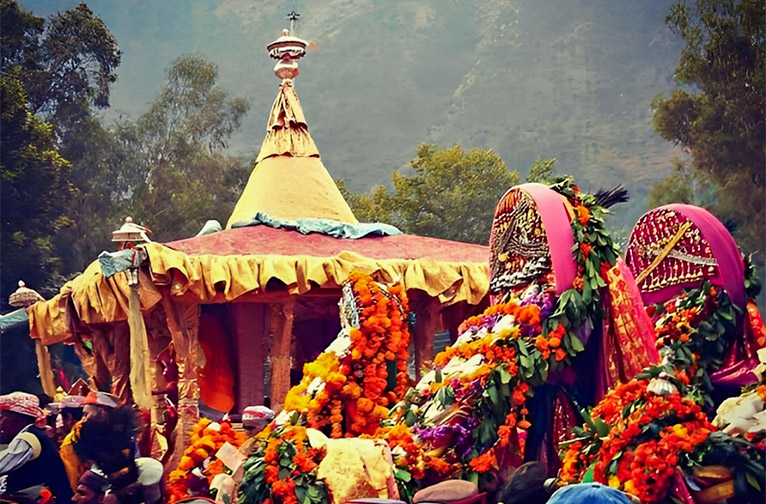
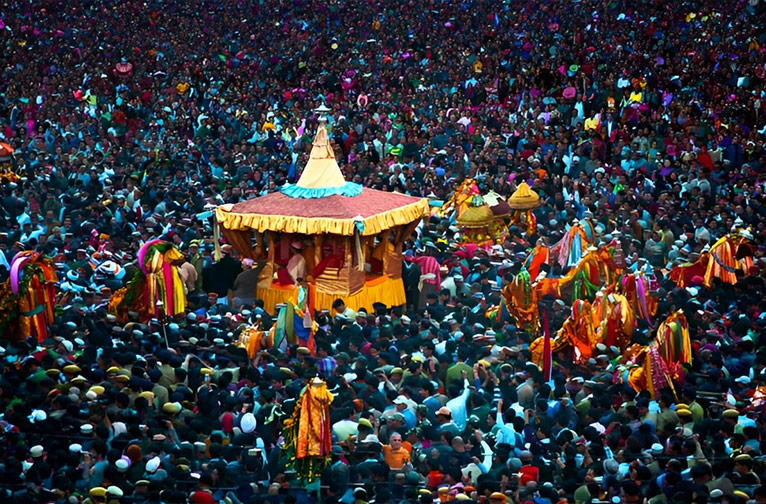
Even the rituals surrounding his worship on this sacred occasion are quite different. In fact, it is the Kullu rajah who invites all these deities to join in this celebration of Lord Rahunathji. Priests who would attend the deity’s needs and conduct the ritual for him were also brought from Ayodhya; their descendants still hold up these centuries’ old traditions. Deeply impacted by the divine power of Lord Rama, Jagat Singh abdicated his throne to the will of Raghunathji and became his ‘Chharibardar’. The ripple-like effect of this also left a mark on all the gods and goddesses worshiped in the state who also accepted the overall lordship of Raghunathji. This royal invitation served as another way to unite the hundreds of deities and the communities spread across the Kully Valley, even from some of its remotest parts. An unusual aspect of the ceremonial affair is that a human ‘oracle’ is believed to be possessed by the deity during these rituals and ceremonial situations. On the last day, emblematic of the end of Lanka, Ranan’s domain, a stack of reeds is burnt near the River Beas. Today lakhs of witnesses gather together to participate in Dev Milan—the mighty congregation of gods in Kullu.
The week-long festivities will hold you in thrall as they bubble over with beautiful facets of a living tradition which gathers together hundreds of Gods and Goddesses at one spot. The deities, which are so dear to the locals from the medley of towns and villages scattered amongst the folds of these Himalayan foothills, come decked to the nines in all their finery. Charged with devotional fervour their devotees will travel many miles, across raging rivers and forested enclaves, to participate in this great gathering of spiritual bounty. What you will love about this unique celebration is the beautiful folksy vibe which holds every ritual of this venerable tradition together.
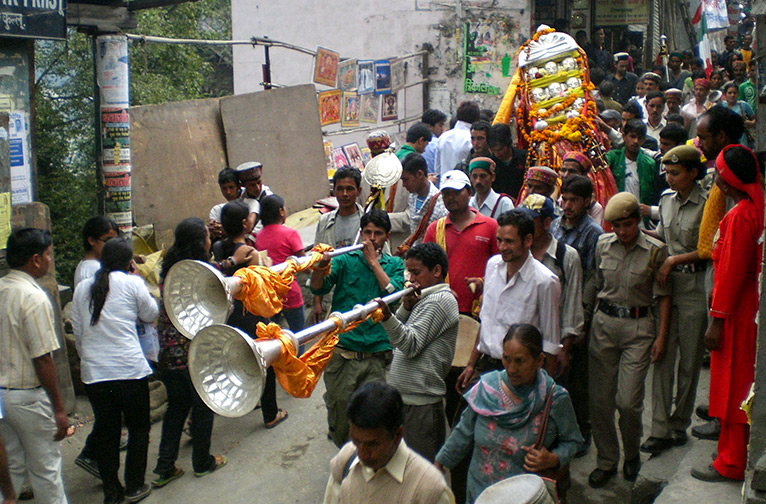
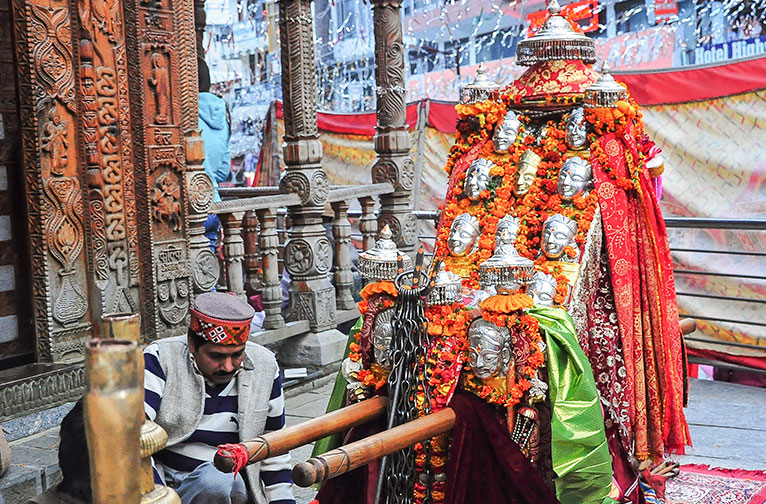
The Dalpur grounds in Kullu town become a riot of colours and sounds as the chariots arrive, festooned in flowers, bells and buntings, with their richly adorned deities, graciously accepting the veneration bestowed upon them by the local populace. It serves as a sharp reminder that these deities are not merely idols consecrated in temples and shrines scattered across the state, they are living gods who walk amongst the people in their everyday life.
The deities in their turn, are here in great numbers to pay obeisance to the premier celestial being Lord Raghunathji. All around the complex tented facilities have been erected to accommodate the visiting deities as they await the main ceremonials to begin. On one accord they emerge from their tents and proceed to the temple, accompanied by drum beaters heralding their arrival in the presence of Lord Raghunath. Before entering, a yellow length of fabric (phagu) is presented to each of them on behalf of the temple. Then they slowly make their way to the main entry point. While the main deities remain here for the sacred procession, the others head out to the mela grounds to welcome the procession to a grand reception. The official rites in front of Lord Raghunathji are concluded by the afternoon. An official from the temple leaves with a sacred pole (chari) to the palace to invite the raja to join the celebrations. On his arrival the idols of Lord Raghunathji and the goddess Sita, his consort, are elaborately draped in garments and jewels as well as fragrant flowers, and placed in a richly decorated palanquin (palki). The Rajah himself is offered a long piece of fabric richly illustrated with images of the deities. This sacred piece of cloth is known as a bagaa. The members of the royalty are also blessed with a piece of cloth known as a phargal and the servers are given a phagu. It is a signal also for the deities to proceed from the temple. Heading the process is the beautifully ornamented horse of Narsnigh, followed by a cavalcade of chariots (raths) with their respective deities. Musicians bring up the rear. Also participating in the ceremonies is Bijli Mahadev and Hidimiba, attended by their own retinues. The royalty then follows behind, accompanied by priests. Lord Raghunath’s palanquin and the Rajah and other dignitaries then join the parade.
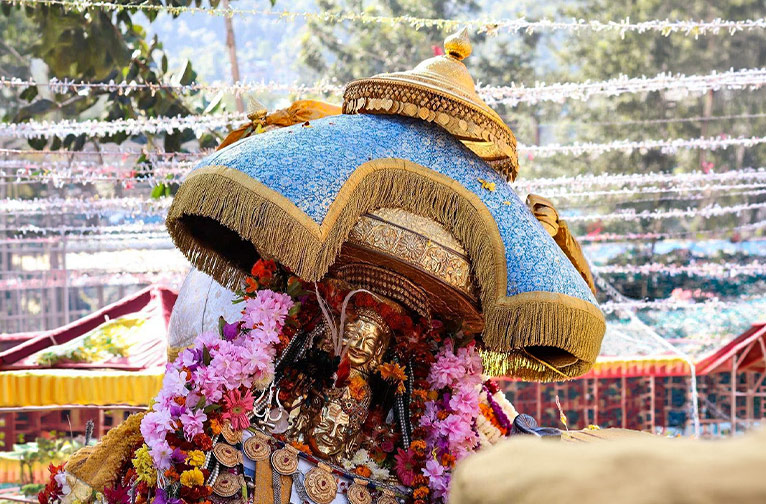
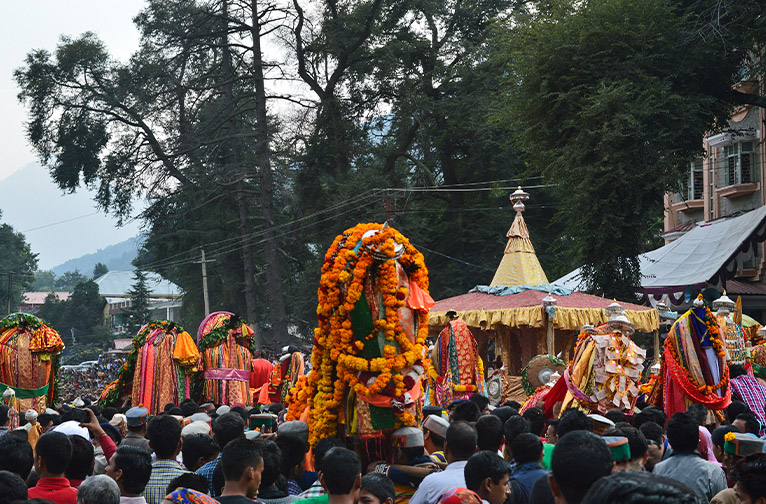
On arrival in the festival grounds the idols of Lord Rahunathji and Goddess Sita are transferred to a richly ornamented chariot (rath). By tradition Lord Raghunathji’s chariot is surrounded by the chariots of the other deities who are also accompanied by their own priests and musicians. A moving ritual then comes into play around the valley’s tutelary deity. A prayer is performed and then the Rajah, his family members, Lord Raghunathji’s own priest and servers (sevaks) and musicians, circumambulate his chariot five to seven times. The Rajah then touches the rope attached with the rath. This is accompanied by shouts of ”Jai Siya Ram, Jai Hanuman” which crack through the still air as hundreds of devotees hasten to drag the chariot to lower ground where the Dussehra ceremonies will take place for public veneration of the deities.
The great gathering of deities is a sight to behold. Carried on the shoulders of their devotees the richly decorated palanquins stream in from Ujhi, Lagg, Maharaja, Rupi, Banjar, Sainj and Outer Saraj area of Kullu district. The air of the festival grounds is awash with the sounds of the dhol, nagara, shehnai, dhouns, bhana and ransingas, as well as the fervent shouts of lakhs of devotees with the arrival of each new chariot.
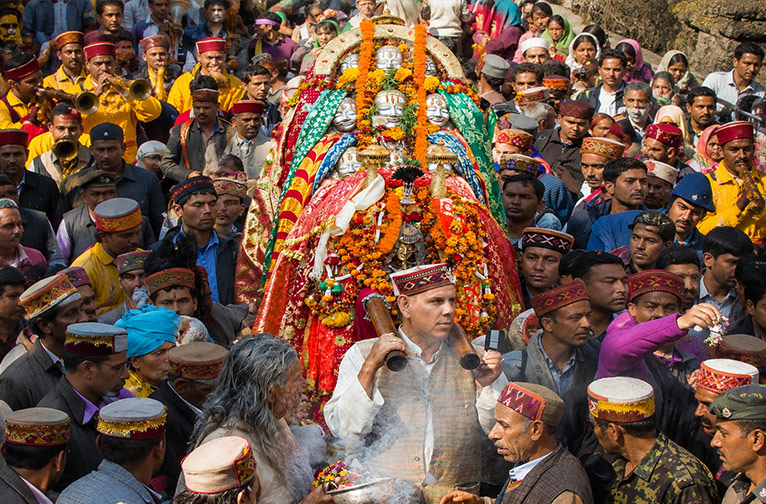
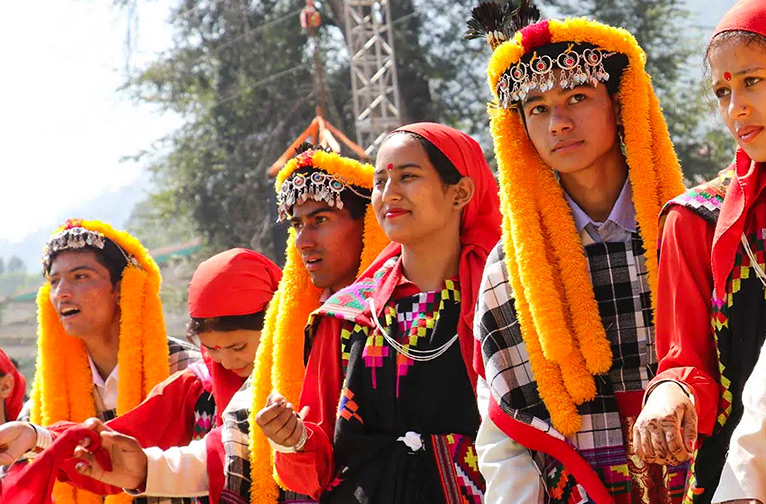
During the festivities you will witness several small parades of the Gods and Goddesses, both in the morning and the evening. Stalls are set up to sell local handicrafts and culinary offerings. You will also discover the richness of Himachal’s glorious folk dance and music traditions over the next few days. The fabulous pageantry and pulsating religious fervour of this cultural extravaganza will remain one of your most memorable takeaways from India.